Sunday, August 31, 2014

The Price of College Has Increased 1120 Percent Since 1978, So Is It Worth It? - The Daily Beast


The Price of College Has Increased 1120 Percent Since 1978, So Is It Worth It? - The Daily Beast:

RANT ON: I wish there was a button on FB for me to post and "like this 1 million times so every eligible voter reads this and realizes wealth is over-concentrating at the top and society will collapse, as it has dozens of times in human history due to this dynamic, if this runaway unstable trend is not reversed."

So you know...wealth doesn't protect you when society collapses, even if you are in the top 0.01%!! Don't believe me? Go ask the headless ghosts of Louis the 16th and Marie Antoinette and their children how much the Palace of Versaille protected them when the wealth disparity tipping point was reached in France in 1792. L16 was actually a progressive who tried to abolish serfdom and also was arguably the one person of the late 1700s without which the American experiment would not even have been able to start (he funded Washington's army right when it needed it and also blockaded british ships from delivering supplies to British troops.)

Yet despite his progressive views on society, and desire to reform the system of serfdom, on Jan 21 1793 he was BEHEADED ANYWAY by the french people!! This was just because of the perception/reality that he was part of the "too wealthy" aristocracy. So in our possibly dystopian future, or that of our kids, for sure all rich republicans will be executed by the masses. But also all the rich democrats will also be executed if wealth imbalance gets out of control again. The hungry masses won't check your voting record when they put you in the "Crucifixion? Yes." line. They will just look to see if you look like you make more than $100K/year and ignore your pleadings that you donated time and money to "Occupy Wall Street".

Also, for you geniuses who think your automatic weapons will save you from the roving masses, When 50 million pissed off citizens line up and come after you I can assure you you don't have enough ammo to kill even the tiniest percentage of them before they overwhelm you with their bare hands and kill you and your family. Also the US military is now made up of 1.1 million people with half active and half reserve and 98% of them make lower middle class pay and many actually are at the poverty line. So you can have your own frigging M1 tank and F22 and you will still get your ass kicked.

WAKE THE FUCK UP AND START VOTING TO ADOPT REASONABLE/BALANCED MEASURES TO SLOW AND REVERSE THE OVER-ACCUMULATION OF WEALTH IN TOO FEW HUMANS BANK ACCOUNTS!!! SHEEESH DO WE HUMANS NEVER LEARN!!!???

Sunday, November 06, 2011

Social Media is Bringing About a "Public Opinion Singularity"


In the blog "Punk Views On Social Media" there is a recent post by Maddie Grant titled "Celebrity Schmelebrity - The Facts Don't Lie" where she talks about how celebrity endorsements are becoming completely irrelevant to consumers and public opinion.

The compelling part of this for me is how it is another indication that as an evermore internet-connected community we are starting to see the emergence of a richer, more adaptable and more intelligent "public opinion". This new Public Opinion is becoming more and more immune all the time to manipulation by an "elite few". That is a really good thing.

But celebrity influence dropping off is only one aspect of this. This is also happening with elite politicians and the wealthy elite becoming less effective at consistently influencing the pubic opinion of the middle classes everywhere. (Arab Spring, Occupy WallStreet, etc.)

The traditional influence of the elite is losing ground because it now has to overome the growing percentage of time each day we all are spending "listening" to each other directly via our Facebook friends, our self-filtered Twitter feeds and and other crowd-sourced media such as blogs and blog comments. We still are consuming the highly homogenized and/or highly filtered feeds from 20th century style news-media but now we are forming our voting opinions much more often when we test our thinking about those topics with our now more trustworthy social networks.

Read the Wikipedia entry on "public opinion" and you start to see the historical context for how "public opinion" is now going nonlinear in it's complexity and power because of the influence of realtime, crowd-controlled social media.

The end result is we are going to rapidly approach a "Public Opinion Singularity" where public opinion will begin to evolve and grow overwhelmingly powerful by riding on the ever more frictionless surface of uncontrolled social media interactions. If we are able to keep the internet open and free, in the face of the elite starting to see this dynamic and fear the loss of power, I see good things happening.

Public opinion is about to rapidly achieve a form of benevolent "near-sentience" that will leave no place for totalitarianism and negative, anti-social beliefs to hide from the spotlight.

The cool thing also is this intelligent, benevolent form of intelligent public opinion will be the most powerfully positive peer pressure we've ever known as a race. It will quite rapidly, in relative historical context,  purge negativity and the attitudes of scarcity and selfishness from our human dialogues. We are about to evolve into a new phase of human society and human existence where the most effective form of government, benevolent dictatorship, will be achieved in a very interesting/surprising way. 

The "benevolent dictator" that will emerge will not be one person who's whims, and finite lifespan, might send us into the ditch. Instead It will be an ageless, crowd-sourced, nearly-sentient construct called "human public opinion" that will be the sum total of all the "better angels of our nature" connected together in an always-on fashion via the global social network.

The hard part is we'll go through a phase marked by the painful extraction of negativity and toxic attitudes from the collective consciousness. (Already happening now in totalitarian states and contexts everywhere.)

But make no mistake it will be a good thing. As much as you might think negativity dominates the human condition the reality is negativity, and selfishness, is only a small part of our total experience. Most people on this planet are overwhelming decent, thoughtful, loving and compassionate by nature in their daily lives. 

Social media is revealing that fact to all of us and making us a better race for it because allows us to be "good" way more than "bad".  Imagine what we can all do together when this process reaches it's logical conclusion over the next 20 years?

John Lennon's vision in his song "Imagine" is within our reach if we keep reaching just a bit longer.


Saturday, September 17, 2011

UPDATE: Steve Job's Secret? He was a "Near-Futurist".

(UPDATE NOTE: I wrote this blog post about Steve Jobs on September 17. Given the loss of his brilliance from the world of innovation I thought I'd push this out again. Steve has been an inspiration to me since I saw the 1984 commercial for the Mac when I was a sophomore in college. If energized me to refocus on getting my engineering degree and becoming a visionary innovator like Steve. 27 years later I'm still focused on being an innovator even at age 47. Steve helped 40+ types like me realize that true innovation mindset is something not limited to the young. Innovation is an attitude you can keep your entire life.)

Everyone lately is trying to figure out why Steve Job's has in the past 10 years gone from failure to unimaginable success and now reached "icon" status. I know why.

It's because he figured out the commercial power of becoming what I call a "Near-Futurist".

Steve Jobs once said...  “It isn’t the consumer's job to know what they want.”

People hearing that who think he was being arrogant don't understand what he was saying.  In that quote he *wasn't" saying consumers don't know what they want/need *now*.  For good or bad we do.

What he was really saying is, "consumer's don't know what they will want 2 years, 3 years, 5 years or 10 years from now but I (SJ) do.".

Every human mind, to one degree of accuracy or another, is a "time machine". We can, depending on the person, vividly remember the past or vividly envision the future, or sometimes both.  Davinci, H.G Wells, Jules Verne and other past futurists could see vividly how technology would affect the future. They often could envision a future decades to 100s of years in the future.

But seeing something that will be popular even only 5 years in the future doesn't result in commercial success. 5 years is just a bit too long.

Steve Jobs is one of those people whose mind always is thinking about and imagining being in the future. He naturally likes to think of futures anywhere from 5 to 25 years from "the now".

But Jobs became more commercially successful in his product visions and projects when he figured out he needed to focus his future vision on what people will want 2 to 3 years in the future instead of 5,10 or 25 years hence.

In 1984 he managed to get a Macintosh product into the market that was 10 years ahead of what most people were ready for and he had what appeared to be a big success.

But in reality that "success" set him back 15 years. It set him back because he thought that success meant he could drag people 10 years into the future every time he launched a product. It took him 15 years from that 1984 commercial (1999/2000) to realize he had to "Think different.". That new thinking and approach was he decided to work on envisioning products that would get delivered within 6 months of those products being wanted avariciously by the mainstream consumer. Deliver the right product 6 months before people want it and it's a lot easier to drag people 6 months into the future and look like you are a super-genius who sees things no one else sees.

So working backward from "launch 6 months before the market is ready" meant he needed to focus his future vision 2 to 3 years out so that he and his team would have the time to deliver "on time"; 6 months before people were ready to "want".

With this approach Apple's competition then is already 3 years behind when he introduces his product and by the time they start reacting they are already 4 of 5 years behind and that is simply impossible to overcome unless Apple stumbles in a big way.

Jobs loves Wayne Gretzky's "I skate to where the puck is going to be." quote.

Steve Jobs developed himself into a specific kind of futurist that optimizes his ability for commercial success by skating to "where the puck is going to be" 3 years from today.

He's successful because he's a..."Near-Futurist".

@roger_tee
http://www.linkedin.com/in/rogertoennis

Saturday, August 20, 2011

The Civilian Innovation Corps - A 21st Century Solution to the Jobs Problem


I am 46 yrs old. I'm a husband, father and engineer and I have what I think is a solution that will re-invigorate the American Innovation Engine/Mindset and bring us out of the mess we find ourselves in.

I was a corporate worker for 20+ years but in July 2007 I was laid off. In the past 4 years journey into becoming a startup company founder I have reached a realization that traditional large corporations were poorly equipped  at leveraging my full abilities. So it was time for me to take a big chance and start my own company and make things happen on my own.

However, the problem I have struggled greatly with this past 4 years is; with 2 kids, a stay at home wife, who had to go back to work in 2009, and a mortgage to pay, it is extremely difficult to find the money to start a company.

Venture Capitalists operate in a way that makes it very difficult for people, even those people with vision and drive, to get the chance to start something new unless they have already led a prior successful company.  Banks won't loan money to a startup without existing customers and revenue so the entrepreneur has a "catch-22" situation dealing with banks.

My only avenue was to make it happen anyway by investing my past and future retirement savings.   This process has made me realize just how high the barrier has become for people to take this step and take control of their lives and careers.It is very clear to me now that this country is full of millions of "30-something, 40-something" and "50-something" people, just like me, at the peak of their abilities, that are perfectly capable of make great things happen in solving big problems for society while generating new jobs for the next generation.

The problem is how to empower those people to realize their potential. Most are criminally underutilized in corporate jobs or have been dumped on the street by corporations seeking "cheap labor" overseas.Today this great pool of wisdom, experience and ability is going largely wasted. Imagine what is possible if we put those people to work in a more powerful way solving the problems we know how to solve.

The Solution: The "Civilian Innovation Corps" (CIC) ******************************************

Economic recovery is about only one thing and only thing; Jobs. Without jobs that pay well across a range of careers and industries the economy can't and won't work.

Therefore I strongly believe that a wise use of a large portion of the "Rescue Plan" funds, combined with philanthropic donation from people like Warren Buffet and Bill Gates, would be to fund a program I call the "Civilian Innovation Corps" (CIC). This program would be a 21st century version of the CCC of the 1930s.

In the 1930s CCC put 'out of work' people 'back to work' in rebuilding the infrastructure of the US. That rebuilt foundation set the stage for our success in WW2 and the breakthroughs we had in the 50 years after WW2.We of course had our failures; but we also had many successes in leading the world to new levels of human societal success and prosperity.

The new deal programs like CCC set the stage for the interstate highway system, the Tennessee Valley Authority, Hoover Dam, the Civil Rights movement, the Space Program, the "people's vision and action" that ended the Vietnam war, our survival through the cold war and ultimately our ability to turn cold war defense technology (ArpaNet) into what we now call the "internet"."

Innovation mindset" is what brought people to this continent. It's what created this "great experiment" called the USA and it's what made the USA the leading force on earth for progress and a better future. "Innovation mindset" is the essential component of what makes America unique. I believe our "innovation mindset" needs a recharge for this new century.

Our Fortune 500 corporations, combined with our Universities, were the primary stewards of our innovation mindset in the 20th century. But with our largest corporations off-shoring product & service innovation and focusing on short-term profits and cost cutting, the F500 innovation engine is sputtering. Also with the high cost of a university education fewer American-born students are staying in school to get Master's degrees and PHd's. University research historically has contributed hugely to our countries core research and innovation so this loss is concerning.

The CIC would launch a new "innovation mindset" stewardship using the modern principles of self-organizing and collaborative communities. The CIC would provide and support a social networking community for laid-off and/or frustrated innovation workers with strong work experience and skills.

These people would have all types of abilities plus a desire to start and be involved in a new innovation-generating startup business. The CIC social network would also look to attract young people with less experience but plenty of drive and passion to make a difference. The CIC platform would then allow people to seek and/or create "Startup Teams" in the CIC community.

The leadership of teams will emerge naturally from small groups of people having the right mix of engineering, science, finance, legal, marketing, etc skill-sets. The team leads would build fast moving extended teams that would tackle hard problems in every industry.

The goal of each team would be to both solve a hard problem and build a viable wealth-generating business that can employ people. The teams would be able to draw from a vast pool of CIC volunteer talent including everything from physical laborers and skilled blue collar workers, to tenured college professors to former corporate CEO's.

The CIC community would also provide short, highly-focused education courses in all disciplines. Volunteer mentors/instructors from all disciplines would lead these courses so people could, if they want, rapidly bootstrap themselves into a new or different career. CIC would allow even for students in high school and middle school to engage in the community to learn, be mentored and to prepare for an entrepreneurial future.The future career path for many people may be something like.....

- At least one viable, CIC-supported small business launched and operating by your high school graduation.

- CIC volunteer work for one year with a second small business started by end of first year.- Income from 2 or more small businesses subsidizes your college education through grad school.

- Launch a more advanced venture in CIC as a team-lead focused on solving a hard problem.

- Launch more ventures until success, and financial independence is achieved.

- Independence from a monthly paycheck by ~35 would allow for people to volunteer their time back to CIC mentoring the latest crop of CIC entrepreneurs and/or CIC youth members in solving the next generation of problems.

Each CIC team would seek a limited initial "venture fund" of anywhere from $10K to $200K depending on the nature of the venture concept. This money would be a mix of CIC government grant money and private money invested in the CIC ecosystem by private equity investors. The initial money would not be used for salaries for team members but only for operations costs.

The participants would however get basic, and free, healthcare coverage provided by the CIC.After some amount of time ~1 yr, if the business passes it's success milestones they would receive a followup fund to scale the business. That funding would either come from CIC, if the concept addresses a very important public/societal need, or would come from private venture funding after having proved the business model as viable. Once funded the people working in these company's would begin to get salaries, as well as equity positions in the founded companies.

As such, CIC would be a classic American combination of governmental seeding of an ecosystem that ultimately becomes maximized for success by private investment and personal enterprise(hard work).

America provided my ancestors with a ladder to success with reachable rungs they could use to reach ever higher with only persistence and hard work. But that ladder has gotten old and is missing enough rungs where it's getting too hard for enough people, even those who are very persistent, to "make the climb".

This CIC concept could be a new American "ladder" to success for ourselves and our children. It would also be the ladder for the next generation of American immigrants from around the world with... "innovation mindsets, yearning to breath free".

Today someone in a foreign country who wants to come to the US must get a corporate sponsored visa to come here and work and start the citizenship process. With CIC, innovation-minded visionaries from anywhere could get a CIC sponsored visa to start them on their path to American citizenship.

America is an idea. The idea is, summed up in a statement we make to people of all countries,...

"Send me your visionaries of every generation and we will put them to work building toward a future where peace, prosperity and respect are the words that describe the human condition on this planet and beyond."

I'm ready to lead a movement to make CIC and other great ideas a reality.

The question I have is; Does the President or Congress care enough about solutions to find and support people like me who are ready to make solutions happen?

Sunday, September 05, 2010

SmartPhone Addict? Partner with Fellow Humans to Create Mini-Zones of 'Digital Free' Human Interaction

(c)2009 Copyright Scott Adams
Are you in love with your "phone" the way Dilbert is in the strip?

Fred Wilson posted on his AVC blog on Friday talking about mobile apps for smartphones. The premise of his post is his observation that a lot of new internet software companies start now by building a "smartphone app" before they have much in the way of a traditional website.

But the interesting thing that came out of the comments on the blog post was a thread started by "akharris" that started talking about how with all this "digital chocolate" for us to snack on we are ALL now becoming highly addicted to caressing our smartphones with a tenderness that used to be reserved for our sweethearts, and we're doing it multiple times per minute. Unlike other activities with this reputation this "luvin up my phone" behavior might actually contribute to people "going blind".

It used to just be we tech-savvy, business-people with our "crackberry habit" of checking work email who were lost in this addiction. But its gone way beyond that now into the broader population and into our private lives as well as business lives. So how do we fight this addiction? Lots of good suggestions in the thread if you read it but here's one that jumped to mind for me.

I realize that directly fighting the urge to check the smartphone is a losing battle. Instead I need to substitute new, additional behaviors into my routine that balance out my desire to constantly check it. The reason we check our smartphones is based in our desire to connect with other people and have social interactions.

What if we started partnering with other humans that we meet in person to create time-limited, digital-free "zones of human-only interaction"?

People would start asking the people they meet in person to "Check your six-shooter at the door of the saloon" you happen to be in when you meet. The 2 or more people who meet would all agree to "drop their weapons" into a non-ringing, non-buzzing, non-flashing "digital storage freezer" where the phones don't interrupt the in-person interaction. This social contract would have everyone be 100% totally present for the conversation until everyone agrees it's time to "re-arm" themselves with their "weapon of choice".

People would start to set meetings where in order to participate everyone would have to agree to this contract or be disinvited from the event. Peer pressure is one of the most powerful motivators of human behavior and if we create "digital storage freezer" apps that disable all the other apps on all the phones in a duly designated "Human Interaction Zone" I think we may be able to get the best of both worlds.

The app for this would be called "Digital Methadone". You're still an addict but you're at least trying to control it and dial back the addiction so it doesn't destroy your personal relationships because you can't look up from that damn device. :-)

The app would disable the phone in which it resides and then report to the other people's apps that your phone is "in the freezer" and when all phones have done the handshake you could start actually having a focused human conversation using that thing on the lower middle part of your face we call a mouth.

Now this might be scary for a lot of people who are deep in the throes of "digital chocolate" addiction. But don't worry. Your Methadone app will make sure you get enough interaction in a day so you don't start foaming at that mouth and shaking uncontrollably. ;-)

Saturday, April 03, 2010

iPad: The Logic Exits Your Left Earhole

I tend to be an "early adopter" of technologies but I've never been a lemming-like "first adopter". I was not among the first kids on my block to get cable TV(parents to blame here).I was not the first to get a "Pong" home game or an Atari video game system or a VHS player. I was not the among the first with a PC in the 80s or a cellphone in the early 90s.  I bought a second gen Motorola razor, 3rd Gen blackberry and a 3G iPhone but not the original iPhone. I held off on buying into DVD until the players were below $300 and I'm still resisting Blue-Ray(On-demand killing this quick anyway). 

I tend to try and jump on the bandwagon just as the technology looks to me to be mid-jump, and sailing safely, over the infamous "chasm" between "early-adopters and "early-majority". 

I guess I don't won't to be stuck "looking like a fool with my pants on the ground" with this year's version of the betamax player. So when I got the chance and I decided to go to the Apple store today on iPad release day it was very much out of character for me. Ostensibly, I had the logical excuse that my iPhone headset's left earphone had gone bad and they always give me a free replacement at the Apple store. Because they know me at the store as a business customer, who has dropped north of $5K at this store the last 12 months, they gave me my free headset and waved me through to go worship at the iPad trough with the first-adopter sycophants. 

My first inclination was to say, "No Thanks" and leave and come back sometime this fall when the hype had subsided and I could take a closer and more sober look. Also by then Apple may already be within 6 months of iPad v2. But since I decided I didn't have to wait in line I figured, "What the heck. I'll give it a look." Despite a packed crowd of people around a table with 6 iPad's tethered to it one freed up just as I walked up. I proceeded to mess with iPad V1 for 30 minutes. 

Played a few games, surfed, checked out book reader and NY-Times app, played guitar hero, typed on onscreen keyboard, listened to music, etc. Since I'm an iPhone user now for near 2 years the UI was familiar and only a short adjustment to get used to typing on the bigger form factor. Now I tend to deep down want to eventually own a lot of the Apple products, even if I do usually hold off a year or more before seriously considering a purchase. But in this case in reading and hearing about iPad I had decided I actually didn't want one. Between my iPhone 3G and my latest gen, top-of-the-line Macbook Pro my logical engineer's brain didn't see how iPad would fit in my life. My logical brain had calculated that iPad was way too "non-orthogonal" of a "device vector" to add significantly to my computing or inter-networked life. But then I made the mistake of picking one up. 

It was immediately clear this thing is smokin' fast on the UI experience compared to iPhone. Plus physically it feels in your hands like what you might imagine Captain Picard was used to when he used his "Star Trek TNG" handheld, touch tablet in that fantasy, future universe. Crap, I am now hooked. 

 The key to the "iPad hook" I've decided, is you have to already have and be comfortable with an iPhone. If you have an iPhone and you touch an iPad you will experience a mindless rush of hindbrain-generated device-lust within moments. You will feel this rush even if you are a sceptic and have read in detail about the well-documented "shortcomings". It's like the iPhone was just some kind of precursor preparation "pod" aimed at preparing it's users to be "body-snatched" by an eventual iPad-like device. 

If you have used an iPhone for more than 6 months and it's now an intrinsic part of your daily life you will touch an iPad and you won't be able to stop the logic in your head from exiting your left earhole. You WILL want one. You WILL crave it. I am craving it RIGHT NOW. 

It's a bit annoying actually. 

 Now I will NOT buy one today and I WILL hold out for the 3G version. But I WILL have a 3G iPad by June 1st at the latest. I didn't see this coming at all. I seriously was convinced that it would be 2 years minimum before I considered something like iPad to go along with my MacBook Pro, iPhone combo. I mean I'll still mainly be MacBook/iPhone for most of what I do. But now I realize I have to find a way to fit this thing in my life. "Why?" you ask? Because the thing was/is....FUN! 

iPhone and iTouch are like drinking the sweet nectar of mobile broadband access to the net and mobile gaming through one of those tiny swizel-stick straws you get in a mixed drink at the bar. The iPad feels like you are drinking the experience in through one of those a big, fat, 7-eleven slushie straws with the little spoon on the end.  

SUGAR RUSH!! 

I rolled my eyes a bit when Steve Jobs said something to the effect of,"It's a whole new kind of device". He is right; once again. Hate or love him it's hard to argue with his results. So after I experienced this "iPad rush" I took a deep breath and started quietly walking around listening to comments in store from customers to see if it was just me. 

It was not just me. I saw a lot of glazed, wide eyes and was reminded of a quote from "Field of Dreams, "...and they will come to the entrance to your farm(Apple store) not knowing why for sure they are doing it...they will pass over their money without thinking about it; for it is money they have and peace they lack...people will most definitely come." Yeah I know that's melodramatic...duh!

The thing is it's NOT a technology product that logically solves an unsolved problem. It's an experience. It's totally illogical, but it's true.

Now before you write me off thinking I'm a total fanboy here I want you to know that I'm of the opinion that there is no perfection in this world. So I'm not saying Apple, or the iPad, is anywhere near that. But the Apple technology experience is way more "human" than almost any other technology product or service you are likely to find. 

Technology built and used for it's own sake is a tedious death-march that drains the human soul. The future of technology must be about serving and enhancing the human experience instead of requiring humans to serve the technology. The person who has the most fun by the time they shuffle off this mortal coil...wins! 

The iPad, the iTouch and the iPhone are about the human experience we call "Fun".

Sunday, March 28, 2010

Somebody, EVERYBODY, is Tracking You!!


Just read a new blog post by Michael Ingram over at GigaOm titled "Will Facebook be the 'One Ring' for Location?".

Michael describes how Facebook is changing its privacy settings so it can start to implement location based services such as those offered by Foursquare, Gowalla, Yelp, Brightkite, Twitter, etc.  For me this brings up the disturbing question that has building for a while. Do you really want all these online services, and all their unnamed third party partners, constantly tracking you using your GPS-capable cellphone/smartphone? 

In 1984 there was a song titled "Somebody's Watching Me!" that came out from an R&B artist named Rockwell with the chorus lyrics...

"I'm just an average man with an average life
I work from nine to five, hey, hell, I pay the price
All I want is to be left alone in my average home
But why do I always feel like I'm in the twilight zone?"

" I always feel like somebody's watching me
And I have no privacy
I always feel like somebody's watching me
Who's playin' tricks on me?"

I think, whether Facebook becomes the aggregation point for your location or not, there will shortly be a consumer backlash against location/tracking by all these online/mobile social networking services "playing tricks on you and watching you"

The core problem is there really isn’t any significant value for the consumer/individual in allowing corporations to track their location. On top of that lack of value for the individual, there are very disturbing privacy drawbacks if Location-Based-Services (LBS) go mainstream. Imagine hundreds of corporations you aren’t aware of, and all their partner corporations, knowing your location at all times.

Does that give you a warm fuzzy? I didn’t think so.

The value delivered by LBS is all for the business/corporation looking to track us. What's in it for us? A Free coffee here or there? Not worth it. I’m a Foursquare, Facebook and Twitter user so I’m not anything close to a privacy nut.

I’m just saying that I see where this trend eventually goes and if it continues it’s not a happy place. There’s no way the bulk of the population, at least in countries that value freedom, is going to stand still for unfettered and constant GPS tracking of their physical location by dozens or hundreds of companies trying to sell you something.


But there is a win/win approach to this problem that will allow consumers to allow a handful of businesses they know, trust and patronize regularly to have a conversation with them about products and services those consumers want to hear about. And this approach will allow consumers to retain 100% control of the privacy of their identity and location.

My company is going to be delivering a solution this year that takes this approach. It will preserve 100% privacy for consumers but still allow businesses to engage with consumers in a way that works for everyone; consumers and businesses.

How do you feel about the possibility of being electronically tracked all the time and having that information broadcast on social networks and "who knows where else"?

Wednesday, February 24, 2010

The US Economy "Tentpole" and the Global Economic "Big Tent"

Just finished reading the article "Intel Leads $3.5 Billion Effort to Advance U.S. Tech and Innovation" that talks extensively about the increasing problem of US college students not entering technology fields. In announcing this initiative Intel CEO Paul Otelli said... 


“Unfortunately, long-term investments in education, research, digital technology, and human capital have been steadily declining in the U.S. So, too, has the commitment to policies that made us such an entrepreneurial powerhouse for more than a century.”


Finally there is beginning to be a growing realization of something that in saying it seems obvious. The US Economy and workforce is, like it or not, the "tent-pole" of the global economic "tent". This may be politically incorrect to point out, from a standpoint of the US trying to be a friendlier and less arrogant global citizen, but the facts bear out the accuracy of this proposition.


So as we try and drag the US and the Global economy out of this recession it's time to be very pragmatic and less politically correct as we attempt to solve the problem. The most effective approach to getting out of this economic mess is to focus on raising the center pole of the Global economic "tent". As much as it may make us all get a warm fuzzy to work multiple individual initiatives with dozens of our foreign economic partners on international economic policies aimed at improving economic conditions, the sad truth is those uncoordinated efforts are unlikely to be highly effective in actually solving the problem.


The reality is we'll get much more bang for our buck, and by "our" I mean all nations, in creating "space" in the global economic "tent" by focusing resources in reformatting and rebooting the US economy. That means US jobs. 


That may sound US-centric. It is. 


But an non-emotional analysis of the last 75 years of the growth of the global economy bears out that this observation of "US as tent-pole" is a truth. What other nation of group of nations currently has all the required elements to be the world's economic "tent-pole" propping up the global economy? The sad truth, or happy truth, depending on your perspective, is it's pretty much still the US at the center of this "tent" propping up global growth and stability. Any "tent-pole envy" that may be experienced by other nations I think is misplaced. Frankly, it is a huge responsibility and pain for the US to have to shoulder this role. The only current alternative seems to be a collapsed tent.


It's time to start reinforcing the tent-pole that is the US economy and this effort by Intel is only one of many private AND government led initiatives that are necessary to get us back in a comfortable-sized tent.  I think we are all now tired of having to worry about our ceiling caving in every 15 minutes.


What steps do you think need to be taken to shore up this global "Big Tent" economy we all have benefitted from and hope to benefit from again?

Sunday, November 22, 2009

All The News That's Fit To Print for ME!


There is an innovative and simple solution to the collapse of the business model of traditional media. The question is whether the old media incumbents will see it and adopt it before they fully collapse or if it will be new entrant players who see it first and take the leap of offering it. The solution is coming it's just a matter of time and who see's it and implements it first. So what is that solution? 

Simple: Give me EXACTLY the information I want, EXACTLY when I want it and I WILL PAY YOU FOR THAT. The future is all about custom/personal information filtering and delivery. Clay Shirky's now famous statement in his, "It's not information overload, it's filter failure." presentation sums up the problem and points at the solution. 


So why is nobody rushing to give me that solution? I'll tell you why. Because it's scary for the incumbents to fundamentally change how they gather and distribute information and it's expensive for new entrants to build and migrate people over to a world-changing information delivery solution. This is always the greatest wall holding back any fundamental change that needs to happen.

But, make no mistake,  this is an idea whose time has come. News media companies are in panic and Information overload has already reached a point where many people are suffering info exhaustion. Given the chance, many will now pay some amount for a service that effectively filters the "info-verse" in a custom way and delivers it to them in a custom way. I know I would. Between Email, IM, RSS, Twitter, Facebook, LinkedIn, Foursquare, Pearltrees, TV, Radio and yes, the occasional newspaper, I am drowning in too much information. What I want is a single, one-stop service that delivers me "All the News/Blogs/Tweets/Music/Videos/Friends That Are Fit To Print/Show/Stream/Deliver/Introduce for or to (Roger Toennis)". 

I WANT TO PAY for a service that Data-mines the web continuously getting, prioritizing and spoon-feeding to me all the info relevant I need to be "dialed in to the what's happenin' on the web and in the world" without me having to do all the work of setting up and tweaking the filters. I also want the service to mine the people networks and find people I need to meet based on my networking goals and and make the introductions for me(us).

In addition I want an option to pay extra to have a real, live, breathing, human person who works for this service to send me personalized voice/video/text notes telling me why I need to read certain articles, watch certain YouTube videos, TV shows or movies. They would also tell about people I should meet and then introduce me to them perhaps even in a live call or video chat when the other person agrees to meet me. When this service is available I will pay up to $200 a month for it, maybe more, if it includes the live-personal-assistant-like features.

Help me surf the information tsunami and hang ten on that wave with style and I WILL PAY YOU FOR THAT!!

Eventually almost everyone will pay as they realize it's the ONLY WAY FOR THEM TO STAY RELEVANT AND COMPETE and be successful in this new "Information and Social Connection" economy.

Wednesday, September 30, 2009

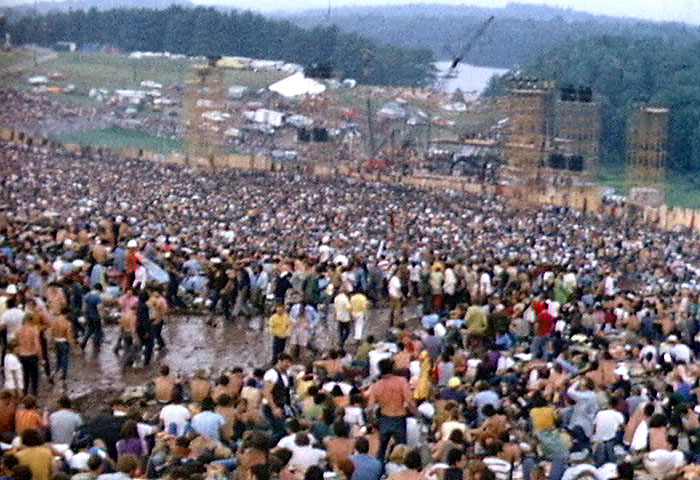
Twitter is Woodstock. Facebook is a Garden Party


Twitter and Facebook are fundamentally different. Facebook is an invitation-only garden party for your friends in your own backyard(garden). Just like Ricky Nelson song "Garden Party". "I went to a garden party to reminisce with my old friends. A chance to share old memories and play our songs again. When I got to the garden party, they all knew my name...." 


Twitter on the other hand is a Woodstock-like festival experience for anyone who shows up at Yasgur's Farm. Like Joni Mitchell sang later.. 


"I came upon a child of god, He was walking along the road And I asked him, where are you going, And this he told me Im going on down to yasgurs farm, Im going to join in a rock n roll band, Im going to camp out on the land, Im going to try an get my soul free, We are stardust, We are golden, and we've got to get ourselves back to the garden"


Joni wrote this because she regretted canceling her appearance at Woodstock. Her agent put her on the Dick Cavett show instead. Yikes, talk about wrong place at the right time! Twitter is like Woodstock in another way; the Twitter promoters (Twitter founders), just like Woodstock, decided to cut the fences down before the day of the concert (Public posting of comments) and spend the money building the stage instead. The human experience of being on FB versus Twitter is also very different. 


With Facebook, conversation is easy because you know everyone at your garden (FB Wall). With Twitter your party doesn't get going until all the Woodstock fence-jumpers have decided you and your tent in the field are worth hanging around and partying with. Which involves getting down and dirty dancing in the mud. ;-)  With Twitter you have to "let go" and mingle with your inhibitions left behind. Just like Woodstock.


So what kind of party do you like? Muddy psychedelic Woodstock? Or civilized and private Garden Party?


Me? I tend to go to most parties I'm invited to. But I really have fun at the ones where I'm a "crasher" . :-)

Monday, September 14, 2009

Avaya/Nortel - Traditional Enterprise Telecom Market Moving Toward Disruption


It was announced this morning that Avaya(TPG/SL) has won the stalking horse auction for Nortel's Enterprise division. Avaya made this move mainly for the channel expansion and market-share growth. They will now look to aggressively churn the Nortel base into buying Avaya solutions.
As economy recovers and large enterprise starts buying capital equipment again it’s very feasible that Avaya could easily gross an extra $900M in the course of 12 to 18 months as a result of the acquisition of the Nortel base and Nortel VAR channel partners. This is what smart private equity buyers do. The attempts by Gores Group (Seimens Enterprise Telecom Division owners) to acquire Nortel mean they saw the exact same value prop as TPG/SL.
The $15M set aside as a “retention” fund for Nortel employees likely is really more a “severance” fund. This is a “spoonful of sugar” to be used in softening the blow for Non-US workers who all have severance requirements built into employment contracts via unions and/or non-US govt regs. US-based Nortel workers are going to have a very rough go of it. It’s mostly a non-impact for Avaya workers or a slight positive.
Also in a more strategic sense this suddenly makes Avaya a lot more attractive in relation to a future liquidity event for TPG/SL. Whether they decide to IPO and relaunch Avaya as a public company or sell it, it’s now a more attractive property. Selling it now may be somewhat more complicated because if it was sold to Cisco or another major telecom player now you truly would have a non-competitive market situation from US FTC/DOJ perspective. So the ideal private sale for TPG/SL would be to Microsoft. That would give at least a duopoly of Cisco versus Microsoft in the Enterprise Telecom market. Another possibility would be a sale to a major telecom carrrier like Verizon; notice VZ complained to DOJ about Nortel/Avaya merger.
In a much broader scope, the Enterprise Telecom/UC market is being set up for a disruption by solutions like Google Voice/Wave. Eventually the future version of traditional “Hosted Telecom” that the RBOC carriers deliver(ed) is going to be replaced by something I call “Cloud Telecom”; or more appropriately “Cloud Collaboration”. F500 companies are going away form big corporate campuses with thousands of people at one site toward a very distributed employee model. Employees more and more are scattered around in small offices domestically and overseas and also lots of people working from home/virtually. So big iron CPE boxes at corporate sites become less and less relevant. Instead all that is needed is for an employee to be able to reach those corporate resources at a network connected datacenter via SSL VPN over broadband. So why not then just outsource the datacenter instead of using inhouse datacenter and IT?
That is where an offer like Google Voice, enhanced with perhaps an Avaya CMS call center supporting virtual agents, becomes very attractive on a variable cost (subscription) basis.
This will disrupt both traditional hosted voice AND customer premise telecom businesses as they currently exist. Even very large multisite companies will be able to go fully to Cloud Collaboration, even in the call center. In call center the traditional equipment will hang on for a long time but now in a hosted/subscription model versus as a capital purchase for the enterprise.
However, It’s going to take about 5 years to 7 years for this disruption to happen and before it becomes clear this is coming, TPG/SL will sell Avaya or relaunch Avaya as a public company and get their money back.

Friday, September 04, 2009

The "Blue Ocean Collaboration" Replacement for Distributed Personal Computing


The period from (1985-2010) is/was a technology/market era that was focused almost exclusively on the mechanics of enabling "Independent Personal Computing(IPC)". The goal was all about faster processors, bigger disks and more RAM to run ever more complex locally deployed PC applications.

That era is coming to an end. 

We now are transitioning from that IPC focus into an technology/market era that will be focused almost exclusively on maximizing the productivity of what I call "Interpersonal Realtime Collaborations" (IRC). IRC is a hybrid value proposition that results from merging the value proposition of communications technology with the value proposition of computing technology. This IRC value proposition will be important in the professional marketplaces as well as the consumer marketplace. 

The reason for this is, 'computing power' is now becoming both ubiquitous and inexpensive, (true both for distributed as well as Cloud-based computing). With computing power reduced to a commodity it can no longer be the primary/exclusive value focus for computing technology companies who want to build and market premium-priced technology products, software, services. 

A similar disruptive process is happening to traditional voice/video/text communication solutions as standalone "Customer Premise" solutions. They also are commoditizing rapidly and traditional communications companies like Avaya, Cisco, Nortel, Mitel, Shoretel, Ericcson, Seimens, NEC, etc. are seeing that erosion in profitability. 

However, the seamless combination of communication technology and computing technology delivered over ubiquitous broadband pipes, that delivers a premium IRC experience, is currently not available widely. But it is something people are starting to demand. Those companies who provide it first will be able to take the initial high margins in this new market. Google is about to launch a big initiative in this area with the Google Chrome OS running on lightweight "netbook" devices.

So what does this mean? The companies (PC manufacturers, Telecom equipment manufacturers, Software companies and others) that refocus most effectively on enabling IRC vs IPC will win the profitability and the marketshare battles. They will win because the best IRC solutions will have the highest customer demand and therefore deliver the highest margins on sales of everything that supports the IRC experience. With realtime communication being elevated in this new era to be a much more critical value proposition the visionary companies have opportunity to to be significant players/leaders in this new IRC marketplace. 

This "IRC marketplace" is an attractive and exciting Blue Ocean into which manufacturers must willing dive head first. 

Monday, August 31, 2009

The Ultimate Collaboration Technology Coming Soon! The HUMAN HIVE MIND! A Force For Good...Not Evil.

Jeremy Epstein has a cool blog post today on an innovative communication social networking activity he came up with called Rolodex Roulette


The basic idea is go to your cellphone contacts and pick one name from your list from each of the letters of the alphabet and call those 26 people.  Odds are you will connect live with maybe 1 of 4 people you call. So maybe 6 conversations. Jeremy had 8. 
Now you may think this is a weird leap for me to make but....I think Jeremy's idea is another tiny step toward the coming of the "Human Hive Mind (HHM)". HHM will be the Ultimate Human Collaboration technology.

Now before you "run" screaming off into the "internet woods" in horror banging yourself into virtual trees, let me reassure you, I think this is a good thing to happen for humanity. Here's why...

I believe we all deeply crave a deeper and more meaningful and positive mental connection with our fellow "man"(gender non specific). So I'm developing a theory that says as we approach the technological singularity point, and we overcome our fear of connecting fully with our fellow human beings, we will hyper-network our brains into a hive-mind-like construct that we will be able to jump in and out of like a swimming pool.  

Game theory says that positive cooperation among human actors produces optimal, 'mutually beneficial' results. This means unless society collapses, and prevents the technology from being developed, the human race is on an inherently natural path to construct and participate in ever more rich "hive mind" collaboration environments. Virtual collaboration worlds like WOW, Second Life, Twitter, Facebook and others are early examples of this direction. Imagine what will happen when in addition to voice, video and text as channels of communication we start to add things like mood to the communication. 

I believe that the majority of the thoughts we have, and the most powerful thoughts, are positive thoughts and I think when we start setting up hive minds that our positive thoughts will be the most self-reinforcing. I believe a logical outcome of this is our society will rapidly start becoming more moral, ethical and philanthropic that we are today. I know this concept scares a lot of people for reasons of privacy, individuality and fears of evil hive minds, such as those depicted in science fiction literature and film, (Star Trek:TNG's "Borg collective").  

But what will really emerge is not this "boogeyman-esque", all-encompassing, mind-numbing version of a hive mind. Instead I think it will be something more akin to what is described in the Star Wars series. There the experienced Jedi are connected via "the force" into being able to feel an overall understanding of the fabric of the collective state of mind other living beings in that society/universe.  

Can you imagine being able to at your own will jump in and out of feeling connected, at a level you find comfortable, to the whole of the human race and it's state of mind? To participate in and contribute to that state of mind? Like anything, if done poorly, it could be damaging to have a hive mind. 

For example; imagine a hive mind being used to exclusively connect only those people who are racists and exclusionists. It could be used by these angry, disenfranchised people to be more effective in causing damage to society. But this danger exists with any new technology. The technology is certain to be used much more often to proactively engender positive interactions between people. I think that ultimately the positive uses of new tech usually outweigh the negative. 

Consider even the positive outcomes of Nuclear science and technology versus the negative outcomes. It's been almost 65 years since the nuclear bomb was developed and yet despite all the massive war strife and anger since then we as a race someone have yet to wipe ourselves off the planet. That tells me something. It says that as a human race, despite our differences, we really do want to survive.
So I think hive mind technology will be no different from when printing, gunpowder, photography, the automobile, aviation, film, radio, nuclear power, TV and internet arrived on the scene of humanity. Some will fear the technology. Some will seek to use the technology for antisocial purposes. But many more will use it to for the purposes of improving the positivity of interactions between people.  

All the previous communciation technology steps that are precursors to hive mind technology (printing, photography, film, radio, TV and internet, etc) have all made significant positive impacts for humanity leading to more freedom, peace and harmony between people. Certainly our 24/7 news outlets focus on the reality that we have lots of war, strife, anger and hatred in todays world. But I think the communication technology improvements over the past 500 years in communication and collaboration technology were crucial to our society advancing.  

Communication technology in the form of printing is what stopped the dark ages death spiral of European society and started it on this ever increasing slope toward positive outcomes for humanity. I think the spike in pain and strife we see coming out now is not a sign of growing overall negativity in the human race. Instead I think it is just a lot of previously hidden resentment, anger and hatred being leeched at a ever more rapid pace out of our collective consciousness by the ever more frictionless nature of our ability to communicate. Communication/collaboration is getting more and more frictionless and affordable.  

Cisco is one company working hard on building affordable, full-body 2D video presence solutions. 3D holographic presence is the next step. In fact in the recent movie I took my sons to, "GI Joe:The Rise of Cobra", Cisco has it's brand splashed all over a bunch 3D, holographic collaboration solutions that exist in the futuristic setting the movie portrays. Now think about later when hive mind solutions start to emerge in concert with that. I think these solutions will accelerate the leeching of hatred, anger, war and negativity out of human society.  

As Yoda said in SW-I ""Fear leads to anger, Anger leads to Hate, Hate leads to Suffering." The path back the other direction from suffering, that inverts this direction, starts with rich and regular communication. Yoda also should have instructed Qui Gon Jin and Obi-Wan Kenobi in regard to the young Anakin Skywalker..."Endeavour always to constantly speak, interact and communicate with your Padouin learner. Communication leads to understanding, understanding leads to collaboration, collaboration leads to fellowship, fellowship leads to trust, trust leads to peace."  

Do not fear the coming of the human hive mind(s). Embrace this evolution, encourage it, participate in it to contribute your positivity. Like the printing press it will be a tool of trust and understanding far more than a tool of ignorance and fear.

Friday, August 28, 2009

Is Google Chrome OS a rival for Microsoft Windows? Or Something else?


In this blog post on the Chomium OS Central blog there is a discussion of whether Chrome OS will be a rival to Windows.

Quotes in that blog from Phil Balmer and Bill Gates indicate where they stand on this question. Summed up they have Alfred E. Nueman's "What Me Worry?" viewpoint. (Bill kinda looks like Alfred doesn't he? :-) )

So clearly Phil and Bill don't get it.

It's not about whether the computing technology is new or not. Disruptive technology rarely is NEW technology. Thats why they call it "Disruptive" versus calling it simply "NEW".

The key enabler for the broad adoption of a truly thin OS with focus on cloud based apps (Chrome OS on netbooks) is all about the availability and adoption of broadband. As the fast internet connection becomes fully available to you pretty much 24/7 everywhere you are, your use of web apps becomes dominant.

Just ask yourself: When is the last time I spent even 30 minutes working on my computer or laptop doing productive work for my job with no internet connection?

Likely it was when you were last on a plane. But at any one time in the US there are about 5000 commercial planes in the air carrying maybe 100 people on average per plane. Thats 50,000 computer users max at any one time who can't do web apps work. Not a big deal really. Plus now airlines are rolling out internet connection on flights. So even that is not a blocking problem.

Chrome is certainly NOT a rival for Windows. It's an alternative for a growing segment of the computing user population!!

And that is the heart of what makes (Chrome OS + Ubiquitous Broadband) a disruptive technology to an incumbent and currently dominant technology provider like Microsoft.

Every dog has it's day. Microsoft has had 25 years worth of days as top dog. All things pass into history and now MS must change to play a new role of it will not be relevant in the future.

What do you think? I want to hear your comments.